Product Comparison
Why Touchless Trash Cans Cost $200 (And How a $10 Solution Works Better)
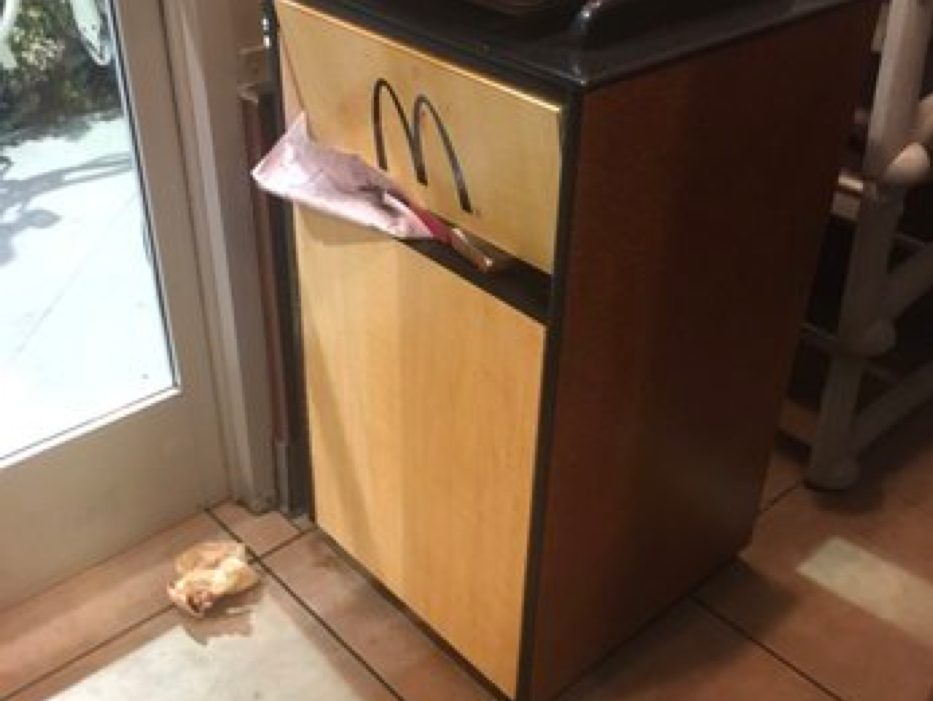
The market response to "trash can lids are gross" has largely been touchless trash cans. Walk through Bed Bath & Beyond, Target, or Costco's kitchen aisle and you'll see them — sleek stainless steel cans with motion sensors that wave their lids open like an automatic door at a hotel.
They start around $60 for the small bathroom-style models. The kitchen-sized ones run $120-200. The premium models with dual sensors, dual compartments for trash + recycling, slim profiles, and quiet motors push $300-400.
For a problem (touching a contaminated surface) that affects every household, this is a strange price point. And when you think about what you're actually paying for, the math gets stranger.
What you're actually paying for
A touchless trash can has, mechanically, three components: a regular trash can, a motorized lid, and a motion sensor. The trash can portion of that bundle costs $15-25 if you buy a standalone simplehuman or Rubbermaid. The motor and sensor add maybe $20-40 in component cost. Markup, retail margin, marketing, and the privilege of motion-activated convenience get you to the final retail price.
The motor is also the part most likely to fail. Touchless trash can reviews on Amazon are filled with the same pattern: works great for 6-12 months, then the motor stops responding, then it's a $200 paperweight. The batteries also need replacement (most touchless cans take 4 D batteries, $5/set, every 3-6 months depending on use).
So the lifetime cost of a touchless trash can isn't just $200 — it's $200 plus battery replacements plus a roughly 50% chance of motor failure within two years. That's the actual price of solving the "don't touch the lid" problem with motors and sensors.
What if you didn't need motors and sensors?
The "I don't want to touch the lid" problem doesn't require electricity. It just requires that your hand have something to push other than the lid itself.
This is what SafeHandle does. It's a small rod that sticks onto your existing trash can lid via industrial adhesive. The rod has a yellow antibacterial-treated tip. You push the tip, not the lid. The lid swings open. Your hand never touches the contaminated surface.
Cost: $9.97 per handle (in our 4-pack preorder). Lifetime: as long as the adhesive holds, which based on commercial deployments is multiple years. No batteries. No motor. No replacement parts. No mechanical failure modes.
Where touchless still wins
Two scenarios genuinely favor a touchless trash can over SafeHandle.
One is when you have full hands and need a hands-free solution — your hand is wet from cooking, or you're carrying something with both hands, or you need to drop something heavy that requires a fully-open lid. SafeHandle still requires you to push with one hand. Touchless waves the lid open without contact.
The other is aesthetic. A modern touchless trash can looks more like a kitchen appliance and less like an ordinary plastic bin with something stuck on it. If your kitchen is designed around premium appliances, the touchless can may visually fit better. SafeHandle is functional, not decorative.
Where SafeHandle wins
Everything else. Cost. Setup time (60 seconds vs. unboxing and battery installation). Reliability (no motor to fail). Energy (no batteries to replace). Compatibility (works on any swing-door trash can you already own — no need to replace the can itself). And the philosophical point: solving a $10 problem with a $10 solution rather than a $200 one.
The touchless trash can is a perfect product if you're a designer who wants to bundle "looks expensive" with "fixes hygiene problem." It's an over-engineered product if your goal is just to stop touching the lid.
Ready to stop touching your trash can lid?
Preorder SafeHandle — From $16.95Read next: The 12 Germ Hotspots in Your Kitchen (Trash Lid Ranks Higher Than You Think) · Kid-Friendly Trash: Teaching Hygiene Without Forcing Hand-Washing Battles · More about our product